

.jpg)


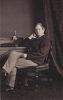
Reverend Walter Raleigh Gilbert, R.N.
 1849 - 1922 (73 years)
The River Camel Fishery Case report 7 January 1871
Royal Cornwall Gazette 7 January 1871
1. Cornwall Epiphany Sessions
FIRST COURT.
(Before Sir COLMAN RASHLEIGH, Bart., Capt. NEVIL NORWAY, R.N.,
and Mr. DEEBLE BOGER.)
Walter Raleigh Gilbert, the younger, gentleman, George Pidduck, police-constable, Edwin Thomas,
groom, William Henry Jago, Sergt. in Royal Cornwall Rangers Militia, and Wm. Thomas, labourer,
surrendered to their bail on an indictment charging them severally and collectively with unlawfully
assaulting Henry Williams, on the 5th July. A great deal of interest was manifested in the case by a crowded
court. Mr. Carter, of Torquay, appeared for the prosecutor, and Mr. Childs, and Mr. Jenkins for the
defendants. All witnesses were ordered out of court.
Mr. Carter opened the case by saying that the assault complained of was committed by the defendants
in the river Camel, as the prosecutor was legally fishing for salmon peel in that river. By an Act of
Parliament, called the Salmon Fisheries Act, there were powers to form boards called conservators to
protect the fish, and these conservators had power to grant licenses to fish in the river with nets of a
particular mesh; and under this Act the Camel has been made a fishing district. The whole of the
defendants were indicted for an assault, but it would be found that the assault was actually committed
by two or three of the defendants only; but the others were aiders and abetters. Still under the Act of
Parliament 24 and 25 Vic., an aider or abetter was liable to punishment the same as a principal. In this
case the prosecutor's name was inserted in the license granted to John Colman as one entitled to fish with
him in the river Camel; the net was of the legal mesh, and at the time of the assault the prosecutor was
exercising his legal rights by fishing in the river Camel. But even had it been otherwise the defendants
were not warranted in using more violence than was necessary to remove them. He could not see that
there was any real defence in the case, because the nature of the evidence was such as to leave no doubt
that Henry Williams was grievously assaulted. The men, Coleman (sic) and Williams, were there lawfully,
rightfully, and peacefully, and without any provocation either of word or deed, were badly assaulted. It
would be for the defendants to justify their conduct, but he held it would be the duty of the jury, however
painful, to find them guilty. With the punishment the jury had nothing to do, the court would discriminate
between those who actually committed the assault and those who were simply aiders and abettors.
Henry Williams, boot and shoemaker, Market-street, Bodmin, said my name is endorsed on the back of
the license issued to John Coleman; it was written by one of the water bailiffs. On the 5th July, I went with
Colman fishing near Dunmere bridge. The net had been approved of by Stanlake, the water bailiff. We
fished in various parts of the river, and about three or four o'clock in the afternoon we arrived at Lucky-
pool. I heard a whistle, and soon after saw the defendant Gilbert cross the stream and speak to Police-
sergeant Colenso. Henry Thomas, servant to Captain Edyvean, then appeared, saying, "Colman, who
authorised you to fish here?" and seized the net. Thomas tripped me with his foot, and threw me down
in about a foot and a half of water; I was on my back and he kept me down. When I got up I saw Jago, who
took me by the collar, and said, "If you are a man I am a man for you," and began to pull the net. I was
thrown under water a second time, and was partially insensible; all the defendants were pulling about the
net. I heard Gilbert say, "Where is a knife, Thomas?" William Thomas cut the net in two. On the bank we
had a scuffle with the defendant, and Sergeant Pidduck said, "You had better give up the net, or I will lock
you up." I have known the river for 30 years; I have fished there for 30 years, and so have scores of others.
I have been forbidden by Mr. Edyvean several times, but have never been interfered with.
Cross-examined by Mr. Childs—The license was made out in John Colman's name; Henry Colman is his
son. I do not own any land by either side of the river. I know some of the property on the banks on the
river at Lucky-pool belongs to Capt. Edyvean. I fished there on the 4th July, and saw Mr. Edyvean, who
told me if I fished that day he would take the net. I went there again on the 5th July. In the afternoon from
300 to 400 persons came from Bodmin, and assembled at Lucky-pool. Colman was with me, and we
remained at Dunmere until the people came; we arrived at Lucky-pool about three o'clock. I don't
remember that Thomas, Mr. Edyvean's servant, ever cautioned me against fishing in the river. Thomas
said on the day of the assault to Colman. "Who authorised you to come here fishing?" Colman and I ran
around Thomas with the net; Thomas might have been under water. Did not hear any one say "Drown the
old fellow." In the forenoon of the 4th July, Capt. Edyvean told us he would seize the net if we fished at
that place (Lucky-pool).
Re-examined—Mr. Edyvean did not say by what right or authority he should seize the net. The license
had been paid for, but it was not delivered until the 5th of July. Had the license been delivered on the 4th
July, Colman and I should not have desisted.
Henry Colman (sic), shoemaker, Fore-street, said: On the 5th July I was fishing in the River Camel. John
Colman was with me. I had a license. We reached Lucky Pool and commenced fishing. I saw Mr. Gilbert
run up the bank with a stick in his hand, and crossed the stream. Thomas seized the net, and threw
Williams backward in the stream. Williams got up and scuffled with Thomas, when Jago came up and again
pushed Williams under water, and appeared about to kneel upon him. The persons on the bank cried out,
and said they were trying to drown Williams. I went to the rescue, and pushed Jago away. Williams gave
no offence to the defendants.
Cross-examined by Mr. Jenkins: The stick which Gilbert had with him was shorter than an ordinary
walking stick; he did not use it. Did not know that the property at Lucky Pool belonged to Mr. Edyvean.
Saw Mr. Edyvean the previous day, the 4th inst., who followed them about, and denied them to fish. It
was decided by me, my father, and Henry Williams, that we should have a notice cried around the town
to the effect that on the 5th we should fish for salmon peel in the Camel, and those who liked might come
and witness the exhibition. Hundreds were present, and a net was thrown into the river. William Thomas
was not entangled by the net; I tried to draw it around him, but he kept out of it. Mr. Gilbert took part in
the assault, and pushed me away when he asked for a knife to cut the net.
Edward Pinch, working engineer, and member of the Bodmin Town Council—l went to Lucky Pit (sic) on
the 5th July, in consequence of a notice by the town crier. My attention was attracted by a dog-whistle
being blown by Mr. Gilbert. He called out to Colenso and had some conversation; Wm. Thomas then joined
them, and went into the river and seized the net; Sergeant Jago and Mr. Gilbert also caught hold of the
net and began pulling. After much pulling on both sides, Wm. Thomas struck Williams in the chest and
knocked him backwards; Thomas continued the rush, and fell upon Williams. I called the attention of
Sergeant Pidduck to the fact, as I considered that Thomas was committing a deliberate act of murder on
Williams. The sergeant nodded his head, but did not interfere. Both men subsequently got up and again
seized the net. The defendant Jago afterwards clutched Williams by the neck, tripped him up, and fell on
him in the water, and intended (apparently) to put his knee upon Williams's chest. He did not do so; those
assembled cried out "Shame," and spoke to the police. William Thomas then renewed the assault, and
tried to keep Williams under water by falling on him. Colman came to the rescue, and in the scuffle that
ensued between Thomas and Williams, the latter got Thomas under water, and then the police interfered
at the call of Mr. Gilbert for Colenso. Mr. Gilbert was pulling the net all this time and subsequently asked
for a knife, and at his order Wm. Thomas cut the net in two halves. Edwin Thomas took no active part in
the affair. I heard the police threaten to lock the men up if they did not give up the net. A small portion
only of the net was retained by Colman. I am 53 years of age, and have known the river as long as I can
remember. I have fished in the river ever since I was ten years of age, and without molestation.
Cross-examined by Mr. Childs.—Had not taken any salmon in the river since the passing of the Salmon
Fisheries Act. This part of the river had been diverted from its natural bed some years since to work tin
streamers. The crowd did not interfere when Williams was under water, because they were determined
to do nothing contrary to law.
Edward Thomas Crabb, printer, gave corroborative evidence regarding the assault, which he saw from
the bank of the river near Lucky-pool. Had enjoyed the privilege of fishing in the river during the past 40
years.
Cross-examined by Mr. Jenkins.—There might have been one foot of water at the place where the
assault took place. Was present with the previous witness at Lucky-pool whilst the whole affair was taking
place. Could swear that Williams's head was under water for some seconds. Had taken great interest in
the prosecution, and was one of the subscribers towards the fund for the prosecution. About £20 had
been subscribed; but he declined to give up the names of the subscribers. He did not believe that Thomas
was under water at all; Williams was getting him under water when the police rushed in at the call of
Mr. Gilbert. No one amongst the assembled crowd took any part in the affair. There was much excitement,
and had either he or Mr. Pinch given the word they would have rushed in to the rescue.
Mr H. S. STOKES, Clerk of the Peace, proved that the river in question was included in the Camel Fishery
District, and produced the list of conservators, among whom is Capt. Edyvean.
Mr. CARTER produced the licence granted to John Colman to fish in the river Camel and its tributaries.
Charles Craddock, 86 years of age, had fished in the river Camel between 70 and 80 years, always with
a rod and line, and had never been forbidden.
Cross-examined by Mr. Childs: Mr. Robert Flamank, of Nanstallion (sic), was very fond of fishing, and
had steps put each side of the hedge, so that fishermen might better enjoy themselves, and without doing
injury.
Mr. Antony Webster, tailor, was on the bank of the river Camel on the 5th July, and described the assault.
Thomas attacked the prosecutor Williams, and was followed by Jago. When Williams was under water the
crowd assembled cried out for the police to go to his assistance, but they did not interfere until Thomas
was under water. Did not see Mr. Gilbert take a part in the assault.
Cross-examined by Mr. Jenkins: Some ten years since Mr. Edyvean gave him liberty to fish from the
Junction to Cotton Woods, passing the place where the late assault took place.
John Colman said he received the license (produced) to fish about a week previous to the 5th of July,
when his net was cut up. The license cost £2, and on its back the name of Henry Williams and John Williams
were endorsed as persons qualified to fish with him. The mesh of the net was measured by Sergeant
Colenso on the morning of the day on which it was destroyed. Did not know what became of the portion
of the net that was cut away. Mr. Gilbert was the last person he saw with it. Had once been forbidden to
fish by Mr. Brewer, of Nanstallion, but was never interrupted.
Cross-examined by Mr. Childs—Where Mr. Brewer denied him fishing Captain Edyvean's land is only on
one side. At Lucky-pool the land belongs to the Flamank family, for which Capt. Edyvean is the trustee.
Henry Bonadey saw the assault on the 5th July, and described it in terms similar to those of previous
witnesses. There were five policemen present on the occasion, and they seemed to act in concert on
Colenso being called by Mr. Gilbert. That part of the net cut away by Thomas was taken away by Pidduck.
Mr. Best, the landlord of a public-house at Dunmere, corroborated all the salient and important points
for the prosecution.
Mr. CHILDS, for the defence, submitted that in a point of law there was no case to go before the jury, as
the licence granted by conservators did not give the holder the right to fish in private grounds, and that
Captain Edyvean exercised the rights of ownership, as provided by the 24th sec. of the 96th chap. 24 and
25 Vic.
This legal objection was overruled by the chairman.
Mr. Childs then addressed the jury, and asked them to dismiss from their minds any previous
impressions they might have received, and pay attention solely to the evidence brought before them. He
complained that the proceedings taken by the prosecution had been unfair and un-English; instead of
having the case tried before the magistrates so that the defence would have been in possession of the
evidence of the prosecution an indictment was obtained at the Court of Quarter Sessions. He pointed out
that the fact of use gave no legal right to persons to fish in the Camel, and the effects of the recent acts
with reference to the preservation of salmon fisheries. He held that undue violence had not been used,
and that William Thomas, as the servant of Capt. Edyvean, had a perfect right to seize the net. He
submitted that there was no evidence to implicate Mr. Gilbert.
Henry Coom, land surveyor, who has acted for Mr. Edyvean for a great number of years, and had
surveyed his property, knew the locality very well where the assault took place. The land on both sides
was the property of Mr. Edyvean, as shown by the plan produced. Some 20 years ago there was a stream
work carried on there, and witness was one of the parties. The stream of the river was then altered, and
has so remained ever since. There was a license from the Rev. Mr. Flamank to carry out the work; in
consequence of this license the works were carried on, and the stream diverted. The present stream
divides Mr. Edyvean's land, and Lucky-pool is part of the land that was divided.
Cross-examined by Mr. Carter—Had fished in the river when a young man, and had never been
forbidden.
Robert Edyvean proved ownership of the land marked on the plan in which Lucky-pool is situate. Had
granted no permission to Colman and Williams to fish in this part of the river. On the 4th July I saw Colman
and Williams, and I told them as sure as they put the net in the water I would take it from them. The
defendant, Wm. Thomas, is in my employment; on the 5tb July I was in Truro, and received a telegram
from Mr. Gilbert. Mr. Gilbert and myself have licenses to fish in the river Camel. I have frequently spoken
to Williams about fishing in that part of the river.
Cross-examined by Mr. Carter: It is not my absolute property; but I have possession under a trust deed.
Re-examined by Mr. Childs: I am in possession of the property as owner and receive rents.
P.C. Dawe deposed to being at Lucky-pool on the 5th, where he saw two fishermen with a net—Williams
and Colman. The first thing he saw was Thomas go to catch hold of the net when Williams caught hold of
Thomas, and fell down himself. Williams recovered himself, and threw Thomas down, and held him under
water for a long time. The people present began to shout out to Williams to drown the ——. There was a
good deal of scrimmaging.
Cross-examined by Mr. Carter: Received his orders from Sergt. Pidduck to go to Lucky-pool; there were
five policemen present. Williams, the prosecutor, fell into the stream, and no one tried to hold him down.
Saw Jago on the side of the river; but not in the middle of the pool. Did not see Jago do anything. Did not
hear anyone say anything when Williams was under water; heard no one ask that the police should protect
Williams.
P.S. Colenso was also present at the scene of the assault. On Thomas attempting to seize the net
Williams caught Thomas by the collar, they had a tussle. Williams had Thomas by the collar, and in trying
to give the "fore-hip" he slipped and fell back into the stream, with Thomas on him; Colman ran around
Thomas with the net. Williams rose and threw Thomas, and on seeing water going into the old man's
mouth, witness went over and rescued him, saying, “Don't drown the old man." The crowd shouted to
Williams to drown Thomas.
Cross-examined—Mr. Gilbert told him on the 5th July that a telegram had been received from
Mr. Edyvean authorising William Thomas to seize the net. Neither Williams nor Thomas gave any
provocation until Thomas tried to take the net. Williams was the first to make a personal attack by seizing
him by the collar; if the contrary has been sworn to it is false. Did not see Sergt. Jago attempt to keep
Williams down in the water. The net, after being cut, was brought to Bodmin and placed in Capt. Edyvean’s
yard.
John George Vincent, deputy chief constable, said he ordered the police-constables to go to Lucky-pool
on the 5th July to prevent a bench (sic) of the peace; he placed them under the command of Sergt.-Major
Pidduck, and charged them not to act without orders from their chief.
Petherick Lukey deposed that some years since he had paid £5 to Mr. R. Flamank for fishing through
certain portions of his property.
Mr. Jenkins then summed up the case for the defendants, and Mr. Carter replied at length. Sir Colman
occupied an hour and a half in summing up.
The jury returned into court at half-past eight, having been absent an hour. They found Walter Raleigh
Gilbert the younger, guilty; Edwin Thomas, not guilty; William Henry Jago, guilty; William Thomas, guilty;
George Pidduck, not guilty.—Mr. Carter said the prosecutor had no vindictive feeling, and was most
desirous to recommend all the defendants to the merciful consideration of the Court. He was instructed
to put that recommendation as strongly as he could.—The Chairman said that it was only a common
assault, and they could impose a fine.—Mr. Carter applied for costs to be added to fines.
The Chairman consulted the other magistrates, and said the court was unanimously of opinion that that
was not a case in which to grant costs. Addressing the defendants—The jury had come to a very proper
decision, considering the evidence laid before them. They would each be fined forty shillings, or, in default
of payment, imprisonment until the money was paid. The fines were all immediately paid.
Outcome
Criminal Courts database
Year 1871 Sessions General Quarter Sessions, January Surname Accused GILBERT, the younger Forename Accused Walter Raleigh Occupation Accused Age Accused Offence Common assault Surname Victim Accuser Forename Victim Accuser Occupation Victim Accuser Parish Offence Plea Verdict fined 40/- Trial Notes Transcriber Notes General Quarter Sessions at Bodmin. Src: National Archives, Cornwall Criminal Registers. Transcriber John Evans
Royal Cornwall Gazette 7 January 18711. Cornwall Epiphany Sessions
The Quarter sessions for the County of Cornwall was opened at the Shire Hall, Bodmin, on Tuesday,
under the chairmanship of Sir Colman Rashleigh, Bart.
The following magistrates were present:—
Sir COLMAN RASHLEIGH, Bart. )
Sir C. B. GRAVES SAWLE, Bart. ) Chairmen.
Lord Vivian. Mr. W. H. Pole Carew.
J. St. Aubyn, M.P. Mr. J. S. Hawker.
E. Brydges Willyams, M.P. Mr. W. Bolitho, jun.
Col. Grylls. Mr. J. C. Daubuz.
Capt. Fortescue. Mr. B. Rashleigh.
Capt. Retallack. Mr. A. C. P. Willyams.
Rev. J. J. Wilkinson. Mr. C. W. Reynolds.
Rev. C. M. E. Collins. Mr. R. G. Lakes.
Capt. N. Norway, R.N. Mr. T. R. Polwhele.
Mr. Tremayne. Mr. A. Coode.
Mr. C. G. Prideaux Brune. Mr. J. Hichens.
Mr. R. Gully Bennet. Mr. W. Copeland Borlase.
Mr. J. T. H. Peter. Mr. R. Foster.
Mr. D. Boger. Mr. M. V. Bull.
Mr. W. L. S. Trelawny.
The Clerk of the Peace having read the royal proclamation against vice and immorality, the following
gentlemen were sworn upon the grand jury:—
Mr. Pease, Boconnoc, foreman.
Mr. W. Dunstan, Truro.
Mr. J. Edgecombe, Liskeard.
Mr. W. H. Edwards, Liskeard.
Mr. R. Channel, St. Columb.
Mr. T. Grenfell, Calstock.
Mr. W. Gill, Truro.
Mr. J. M. Ham, Bodmin.
Mr. S. Harris, Bodmin.
Mr. W. Jose, Falmouth.
Mr. L. C. Kelway, Falmouth.
Mr. E. Kendall, Truro.
Mr. J. H. MacKenzie, Truro.
Mr. W. Nicholls, St. Austell.
Mr. R. S. Olver, St. Mabyn.
Mr. R. Polgreen, St. Germans.
Mr. H. Pollard, Falmouth.
Mr. J. Philp, Liskeard.
Mr. T. Stephens, Launceston.
Mr. T. Solomon, Truro.
Mr. S. Stephens, St. Columb.
Mr. J. Spear, Bodmin.
Mr. J. Stephens, Bodmin.
The CHAIRMAN, having thanked the grand jury for their full attendance to perform the business of the
county, said the calendar, whether in the number of prisoners or the character of the offences, was one
of a very light description, and would not occupy much of their time. For the most part the cases were
exceedingly simple....
extract from https://www.opc-cornwall.org/Resc/assizes/1870%20Cornwall%20Quarter%20Sessions%20and%20Assizes.pdf
| Owner of original | Royal Cornwall Gazette |
| Date | 7 Jan 1871 |
| Linked to | River Camel; Lucky-pool, Dunmere Bridge, River Camel; Captain Robert Edyvean; Reverend Walter Raleigh Gilbert, R.N.; Henry Williams, Henry Williams, boot and shoemaker, Market-street, Bodmin |